Posted in: haircare read





When I see individuals who are experiencing any type of hair loss or excessive breakage, one of the first things they often say to me is, “Amy, I’m so scared to wash my hair.” This fear usually comes from the fact that washing is when people notice the most hair shedding. Hair is also in its most compromised state when wet, which can make the experience feel even more alarming.
Most conversations around hair loss focus heavily on products such as shampoos, conditioners, masks, and leave-in treatments but the tools we use are often completely overlooked. When hair is fragile, how you brush it matters far more than people realise, regardless of how good your products are.
Conditions such as telogen effluvium, which is categorised as diffuse hair shedding caused by a disruption to the hair growth cycle, commonly triggered by factors such as nutritional deficiencies (including low iron), can result in noticeable increases in shedding. Individuals may see more hair in the shower, on their clothes, and in their hairbrush. As density decreases, the hair often becomes weaker and less resilient to tension, making it more prone to breakage or premature release from the follicle. This is why both hair tools and brushing technique play a key role in maintaining hair integrity.
When hair is wet, its strength is significantly reduced. This is due to changes in elasticity within the internal structure of each individual hair fibre. Hair is held together by hydrogen bonds, which temporarily break when the hair becomes wet and reform as it dries. A simple technique we use in trichology is to gently stretch a single strand of hair to assess its condition. Healthy hair will stretch and return to its original length, much like an elastic band, whereas compromised or damaged hair will snap under tension.
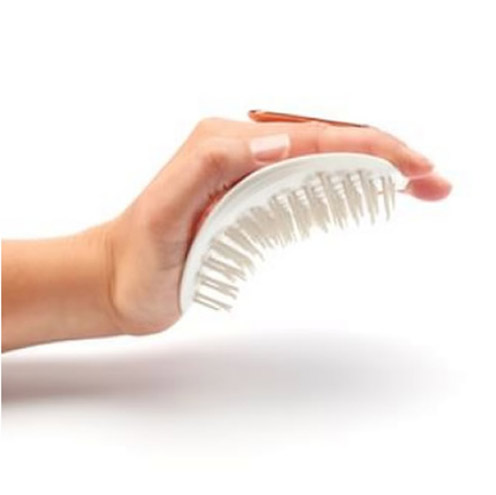
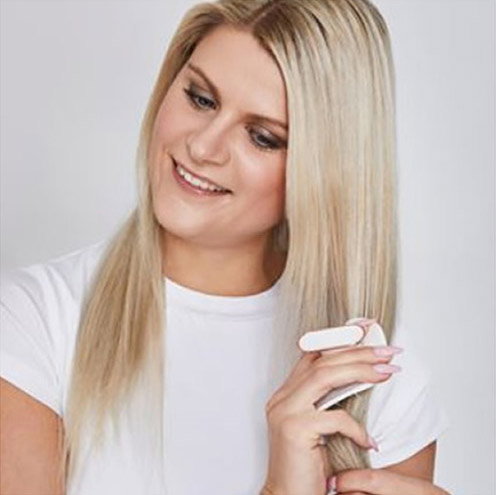
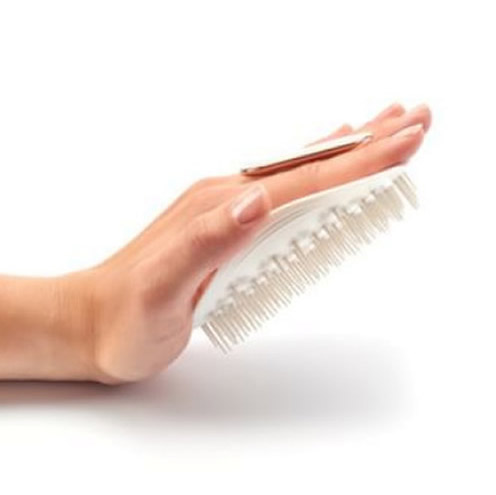
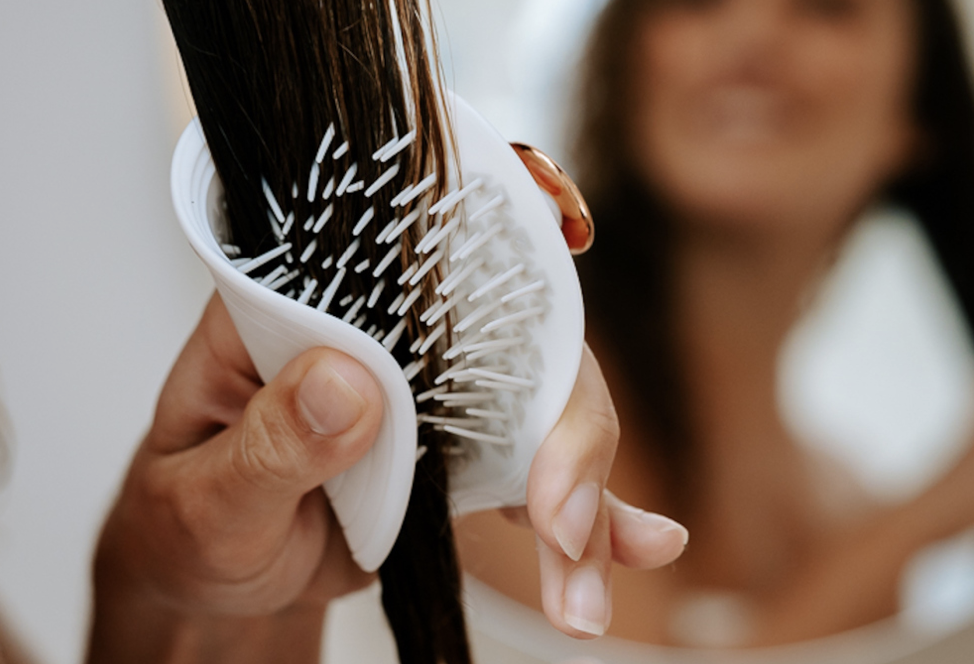
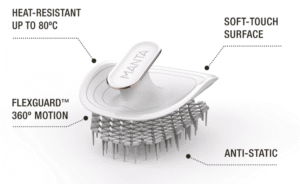
This is where brush design becomes particularly important. I get genuinely excited when I see patented technology, because it means the design is truly unique. The Manta brush uses flexible flex-guard technology that curves to the scalp and moves with the hair like a glove. Most everyday brushes have a solid base where only the bristles bend, meaning the force is driven directly into the hair. With Manta, tension is dispersed through the flexible base, allowing the brush to glide through tangles rather than forcing knots apart. This significantly reduces unnecessary pulling, breakage, and premature shedding.
From a trichology perspective, brushing fragile hair should never feel rushed or aggressive. I always advise starting at the ends and working upwards in small sections, rather than pulling from the root down. This reduces tension through the lengths and prevents knots from tightening. Hair should be brushed gently, particularly when wet, and ideally with a brush designed to adapt to the hair rather than work against it.
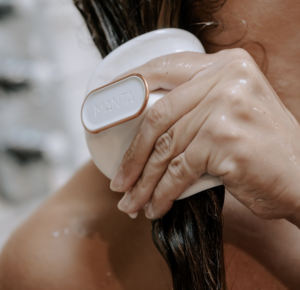
The brush is also incredibly versatile and can be used during shampooing, when applying treatments, for detangling, and for styling. For this reason, it’s not something I only recommend to individuals experiencing hair loss or breakage; it’s a supportive tool for anyone wanting to protect the health of their hair.
It’s important to be clear that no brush can treat or cure hair loss unless the underlying cause is addressed. However, the right tools can play an important supportive role by reducing unnecessary tension, protecting fragile ends, supporting scalp comfort, and minimising damage that can worsen the appearance of thinning hair.
Hair loss and damaged hair can feel overwhelming and, at times, frightening. But small changes in daily habits matter far more than people realise. Choosing gentler tools and improving brushing techniques is one of the simplest and most effective changes I discuss with patients. Be kind to fragile hair; it’s already working hard enough.
Written by: Amy Hunt AIT